
When Christianity Shows Its True Colors—And They Aren't What You Think
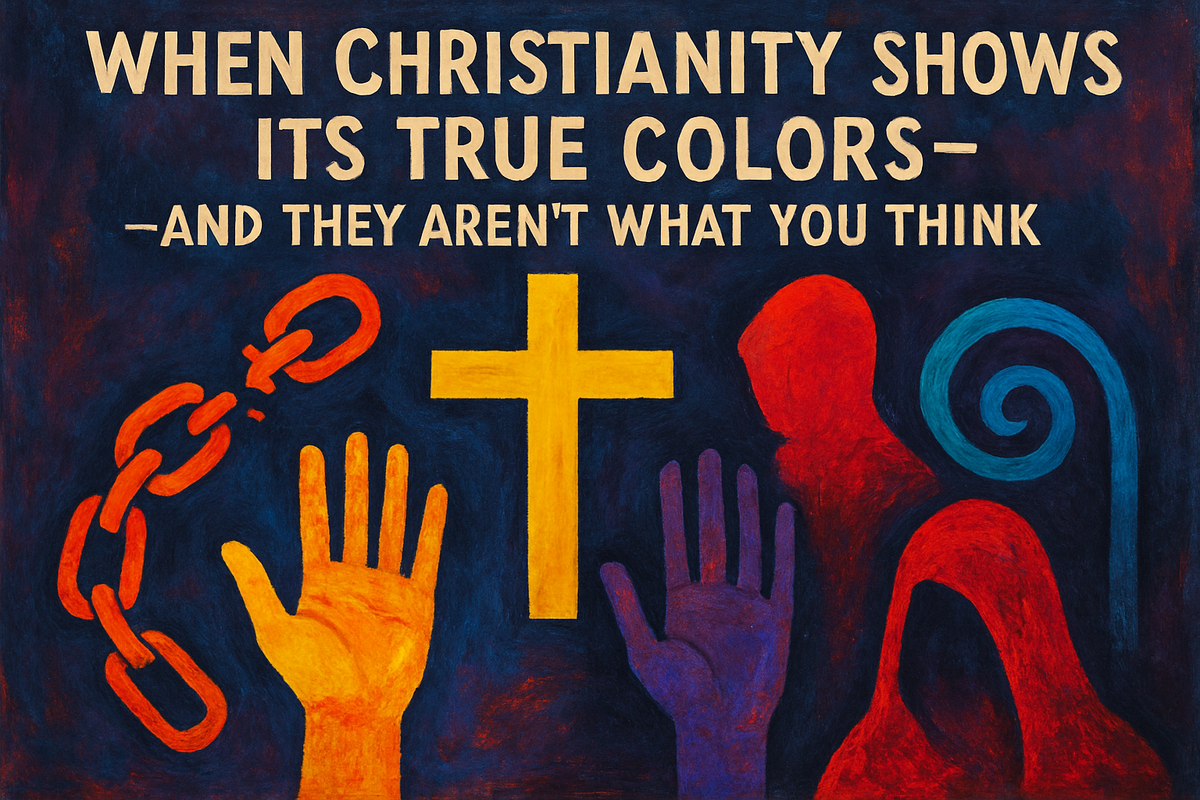
The bottom line up front: When leaders who claim Christ support policies that harm immigrants and marginalized communities, or when ministers remain silent while ICE raids churches, they're not just failing their neighbors—they're failing Christ Himself. The world is watching, and too often what they see contradicts the very foundation of our faith.
The Non-Negotiable Foundation
Jesus didn't stutter when He declared the greatest commandments: "You shall love the Lord your God with all your heart... and your neighbor as yourself" (Matthew 22:37-39). This isn't optional Christianity—it's foundational. As Scripture makes clear, "On these two commandments depend all the Law and the Prophets" (Matthew 22:40). Yet today, we witness a troubling disconnect between proclaimed faith and practiced love.
Recent evangelical polling reveals deep divisions over immigration policies, with many Christians struggling to reconcile their faith with their politics. Some claim to follow Christ while supporting policies that separate families, deny refuge to the persecuted, and treat immigrants as threats rather than neighbors. This is exactly what James warned against: "If you show partiality, you are committing sin" (James 2:9).
Every Person Bears God's Image
Here's what makes hatred toward anyone—regardless of color, religion, sexuality, or nationality—so fundamentally anti-Christian: "God created man in his own image" (Genesis 1:27). This isn't theological theory; it's practical truth with immediate implications.
Genesis 1:26-27 establishes that all individuals possess inherent dignity and creative potential precisely because they're made in God's image. When we hate immigrants, dismiss the poor, or turn away refugees, we're not just rejecting people—we're rejecting the divine image they carry. Humans possess a unique awareness and capacity for reason, morality, language, and love that reflects God's own character. To hate them is to hate their Creator.
Who Is My Neighbor? The Radical Answer
Jesus shattered conventional thinking with the parable of the Good Samaritan (Luke 10:25-37). In first-century Palestine, Samaritans were despised outsiders—ethnically mixed, religiously suspect, and politically hated by Jews. Yet Jesus made this "enemy" the hero who shows true neighborly love while religious leaders pass by.
The parable teaches that "those who are different from us are our neighbors just as much as our best friend who lives next door." Today's application is unavoidable: the immigrant fleeing violence, the refugee seeking asylum, the person whose politics or lifestyle differs from yours—they are all your neighbors. "Those that we hate, and those that hate us, they are our neighbor."
The Consequences of Loveless Christianity
Scripture pulls no punches about the fate of those who claim faith but lack love. In Matthew 25:41-46, Jesus describes the final judgment where some hear: "Depart from me... For I was hungry and you gave me no food... a stranger and you did not welcome me." The verdict? "These will go away into eternal punishment."
This isn't about earning salvation through works—it's about authentic faith producing authentic love. As John bluntly states: "If anyone says, 'I love God,' and hates his brother, he is a liar" (1 John 4:20). Recent polling shows that 80% of those at risk of deportation under current immigration policies are Christians. When churches support or remain silent about policies that target their own brothers and sisters in Christ, what does that say about our love?
A Call Beyond Silence
Faith leaders across denominations are taking stands against immigration crackdowns, with some positioning themselves "between law enforcement and protesters, serving as human buffers." They understand that "silence in the face of injustice is complicity."
Micah 6:8 reminds us what God requires: "to do justice, and to love kindness, and to walk humbly with your God." This isn't political activism—it's biblical obedience. Evangelical leaders argue that suspending refugee programs "harms the U.S.' ability to offer protection for people seeking to enter the country in order to practice their faith freely."
The Path Forward
The world needs to see Christianity defined by love, not hate. This means:
Examining our hearts: Are we loving our neighbors, or are we complicit in systems that harm them?
Expanding our circles: Moving beyond the "concentric circles" of self-interest to embrace all who bear God's image.
Taking action: Whether through advocacy, direct service, or simply changing how we talk about immigrants and marginalized communities.
Speaking truth: Using our voices to call out hatred disguised as righteousness, even when it's uncomfortable.
The Stakes Are Eternal
This isn't about politics—it's about the integrity of the Gospel. When we fail to love our neighbors, especially the most vulnerable, we don't just lose credibility; we face the warning James gives: "judgment is without mercy to one who has shown no mercy" (James 2:13).
The choice is clear: Will we follow Christ's radical call to love enemies and welcome strangers, or will we offer the world a Christianity that looks more like nationalism than the Gospel? The keys to the kingdom belong to those who love as Jesus loved—without borders, without conditions, without limits.
The world is watching. Let's show them a Christianity worth following.
"And these will go away into eternal punishment, but the righteous into eternal life" (Matthew 25:46). The question isn't whether you're religious enough—it's whether you're loving enough.