
Trump Administration's Epstein Files Suppression Strategy
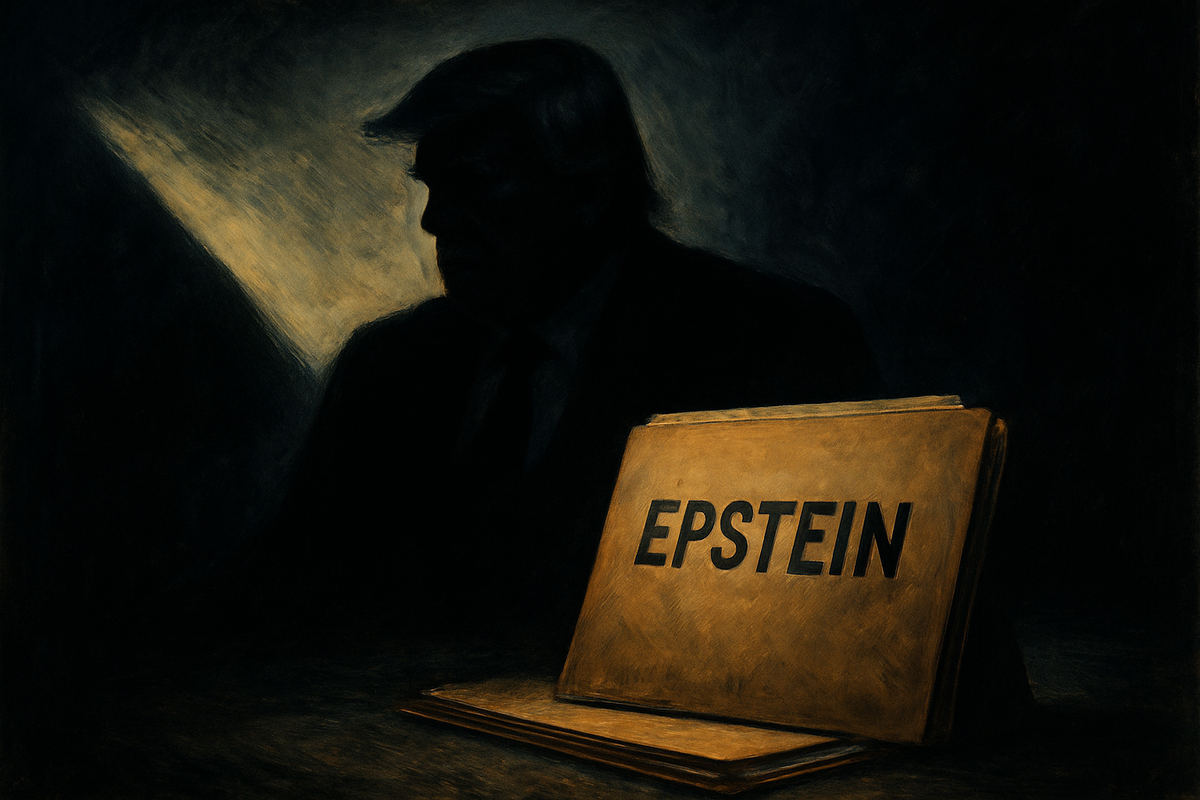
The Trump administration orchestrated a systematic effort to control the This coordinated strategy involved multiple administration officials, Republican lawmakers, and deliberate policy reversals that contradicted explicit campaign commitments. The evidence reveals a clear pattern of deception, internal conflicts, and ultimate document suppression justified by protecting "victims" and "national security."
Campaign promises crumbled under political pressure
The administration's position evolved dramatically from campaign transparency pledges to complete suppression within months. During the 2024 campaign, Trump told Fox News he would declassify Epstein files, stating "Yeah, I would. I guess I would." VP candidate JD Vance declared on the Theo Von podcast: "Seriously, we need to release the Epstein list. That is an important thing."
These promises continued into early 2025. FBI Director nominee Kash Patel told Senate confirmation hearings he would "absolutely" work to expose Epstein's sex trafficking network. By February 2025, Attorney General Pam Bondi dramatically claimed the "client list was sitting on my desk right now to review" and promised viewers would see "a lot of flight logs, a lot of names, a lot of information."
However, by July 7, 2025, the Department of Justice released a memo concluding "no incriminating 'client list' exists" and declared "no further disclosure would be appropriate or warranted." This represented a complete reversal of months of aggressive transparency promises from the same officials.
Republican lawmakers systematically blocked transparency measures
Congressional Republicans coordinated with the administration to prevent disclosure through specific legislative actions. On July 15, 2025, seven House Republicans on the Rules Committee voted to block a Democratic amendment requiring Attorney General Bondi to publish all Epstein documents on a "publicly accessible website" within 30 days.
The Republicans who voted against transparency included Rep. Virginia Foxx (R-NC) as committee chair, Rep. Michelle Fischbach (R-MN), Rep. Erin Houchin (R-IN), Rep. Nick Langworthy (R-NY), Rep. Austin Scott (R-GA), Rep. Morgan Griffith (R-VA), and Rep. Brian Jack (R-GA). Only Rep. Ralph Norman (R-SC) broke ranks, voting with Democrats and stating: "The public's been asking for it. I think there are files. All of a sudden not to have files is a little strange."
Committee Chair Foxx defended the Republican position: "I think most of us believe what's appropriate will be released when it is time for the president to release it." This deference to executive authority directly contradicted Republican campaign promises about congressional oversight and transparency.
Internal conflicts exposed administration's deliberate suppression efforts
The administration's document control efforts created significant internal tensions between senior officials. FBI Director Kash Patel and Deputy Director Dan Bongino were "furious" over AG Bondi's handling of the Epstein investigation, according to multiple Trump administration sources cited by Rolling Stone. Bongino "clashed" with Bondi at the White House over file handling and was reportedly considering resignation.
Bondi ordered FBI Director Patel to deliver "the full and complete Epstein files" by 8:00 AM on February 28, 2025, investigating "why the request for all documents was not followed." When initially provided approximately 200 pages, Bondi was later informed of "thousands of pages of documents related to the investigation and indictment of Epstein that were not previously disclosed."
The pressure led to deploying as many as 1,000 FBI agents, many normally focused on national security matters, to help review Epstein materials. This "all-hands-on-deck effort to expedite the release of additional material led to a growing rift between officials at the FBI and DOJ," according to ABC News reporting.
Staged transparency events concealed actual document withholding
The administration orchestrated deceptive public events to create the appearance of transparency while withholding substantive information. On February 27, 2025, Bondi staged a White House event giving conservative influencers binders labeled "The Epstein Files: Phase 1." Analysis revealed these files "largely contained documents that have been previously leaked but never released in a formal capacity by the U.S. Government" and were "largely made up of documents that had already been made public."
This staged rollout demonstrated the "administration's penchant for showmanship and preference for conservative influencers with large social media followings" rather than genuine transparency. The materials provided contained "mostly previously public records," causing backlash even from Trump supporters who expected new revelations.
Bondi's messaging evolved from claiming a "truckload of evidence" from the FBI in March 2025 to the July determination that "no further disclosure would be warranted." This contradiction between public promises and final policy decisions represents a documented pattern of deliberate deception.
Congressional pressure revealed coordinated suppression strategy
Democratic oversight efforts exposed the administration's coordinated suppression strategy. Rep. Robert Garcia and Rep. Stephen Lynch sent formal letters to AG Bondi and FBI Director Patel asking whether Epstein files were being withheld because they "personally implicate President Trump." Senator Ron Wyden renewed demands for files from both DOJ and Treasury Department, citing "hundreds of millions of dollars in payments to Epstein by several ultra-wealthy individuals."
The Treasury Department acknowledged possessing requested records but refused to provide copies for Congressional analysis, demonstrating coordinated resistance across multiple agencies. This pattern of inter-agency coordination in withholding documents suggests a deliberate, systematic approach to suppression rather than routine bureaucratic delays.
Senate Republicans largely avoided taking positions supporting transparency, with Majority Leader John Thune (R-SD) stating: "Those matters fall under the DOJ and FBI's jurisdiction. President Trump has expressed his views, and the DOJ and FBI concluded there is no credible evidence of Epstein blackmailing individuals." This deference to executive authority contradicted traditional Republican positions on congressional oversight.
Political pressure from Trump's base influenced agency decisions
The administration faced documented pressure from Trump's political base that influenced agency handling of the files. AG Bondi confirmed facing pressure from "The MAGA group" who were "mad that we don't know more about the Epstein files." External pressure included Elon Musk's post stating: "@realDonaldTrump is in the Epstein files. That is the real reason they have not been made public."
This external pressure led to the controversial February 2025 White House event and contributed to the internal conflicts between agencies. The administration's response pattern showed sensitivity to political pressure rather than commitment to transparency or legal process, with policy decisions appearing to follow political rather than investigative imperatives.
Alleged systematic elimination of witnesses follows Putin-style pattern
The alleged systematic elimination of key witnesses creates a pattern that validates conspiracy theories about elite coverups. Jeffrey Epstein's "suicide" in Manhattan prison was followed by Jean-Luc Brunel, the modeling agent central to the trafficking operation, who was found dead in his French jail cell in February 2022, reportedly by hanging with bedsheets. Most recently, Virginia Giuffre, one of the most prominent Epstein victims and accusers, died by suicide at her farm in Western Australia in April 2025, just months before the Trump administration's complete suppression of the files.
The compromised video evidence adds to suspicions of manipulation. The DOJ's "full raw" surveillance video from Epstein's last day alive shows expert analysis revealing it "appears to have been manipulated." The metadata suggests the file was saved multiple times and appears to contain two separate MP4 files that were combined. Most significantly, the video jumps from 11:58:58 p.m. to 12:00 a.m., missing the crucial minute when Epstein allegedly died.
This alleged elimination pattern creates the exact scenario conspiracy theorists have long feared: key witnesses die at convenient times for powerful people, technical "failures" destroy crucial evidence, and official explanations strain credibility. The timing of Giuffre's death, occurring just months before Trump takes office and begins suppressing evidence, follows the Putin-style playbook of eliminating problematic witnesses before they can testify.
The most revealing aspect of the coverup strategy involves Ghislaine Maxwell, the only person to serve prison time in the Epstein network. According to Michael Wolff, during Maxwell's 2020 arrest, Trump grew "very wary" and began asking, "What could she say—what would she say?" Trump mulled using his executive powers to pardon her, but "everybody around him was kind of like, 'God, we hope she won't say anything, but we really hope he doesn't pardon her.'"
Now serving a 20-year sentence, Maxwell is creating maximum leverage through multiple pressure points. She has appealed her conviction to the Supreme Court, arguing she was covered by Epstein's 2007 non-prosecution agreement. Sources close to Maxwell report she is "hopeful President Trump will review her case and pardon her" following the DOJ's announcement that no client list exists. Most significantly, Maxwell has signaled willingness to testify before Congress, with sources stating: "She would be more than happy to sit before Congress and tell her story. No one from the government has ever asked her to share what she knows."3
Trump's DOJ response reveals internal tensions over Maxwell's fate. Solicitor General D. John Sauer requested two extensions before ultimately filing a brief opposing Maxwell's Supreme Court appeal on July 14, 2025. The delays suggest significant deliberation about how to handle the only living person who could expose the full scope of the Epstein network's activities and Trump's involvement.
Mar-a-Lago documents case reveals potential Epstein files connection
Democratic lawmakers have identified a concerning pattern linking the suppression of both the Epstein files and the unreleased Jack Smith report on Trump's classified documents case. Rep. Jamie Raskin and other Democrats sent a letter demanding AG Bondi release both "former special counsel Jack Smith's report on the Mar-a-Lago investigation as well as any of the Epstein files that reference President Trump," describing this as "part of a pattern of using the DOJ to cover up evidence of criminal wrongdoing by President Trump".
The timing is significant: Trump was accused of taking and shielding from authorities more than 300 documents with classified markings from his presidency, and the Department of Justice typically releases special counsel reports but has broken tradition by failing to release Smith's Mar-a-Lago report. Meanwhile, conspiracy theorists noted that when FBI agents searched Trump's Mar-a-Lago club in 2022, the judge who signed the warrant, Bruce Reinhart, had previously represented employees of Epstein.
This raises the possibility that Epstein-related materials may have been among the classified documents Trump retained at Mar-a-Lago after leaving office. The administration's coordinated suppression of both investigations suggests they may be protecting overlapping information that could implicate Trump in both cases. Given that Michael Wolff reported seeing compromising photos of Trump with Epstein that were in Epstein's safe when the FBI raided it during Trump's first presidency, the question of what happened to that evidence - and whether copies existed among Trump's personal files - becomes critical.
Conclusion
The documented evidence reveals a systematic effort by the Trump administration and Republican lawmakers to suppress Jeffrey Epstein files through coordinated actions across multiple agencies and congressional committees. The pattern includes explicit campaign promises of transparency, staged events creating false impressions of disclosure, internal pressure campaigns on law enforcement agencies,alleged systematic elimination of key witnesses, and ultimate policy reversals justified by protecting victims and national security.
The administration's final position - that no client list exists and no further disclosure is warranted - stands in stark contrast to months of promises from the same officials about comprehensive transparency and accountability. The parallel suppression of both the Epstein files and the Jack Smith Mar-a-Lago report suggests a broader strategy to conceal potentially overlapping evidence of Trump's wrongdoing across multiple investigations.
The alleged systematic elimination of witnesses - Epstein, Brunel, and Giuffre - combined with compromised video evidence and Maxwell's unique leverage position as the sole survivor facing prison time, creates a Putin-style pattern of witness elimination and evidence suppression. Maxwell's threats to testify before Congress while seeking a presidential pardon demonstrates the precarious balance the administration must maintain between silencing potential witnesses and avoiding the appearance of obstruction.
This represents one of the most documented cases of campaign promise reversal in recent political history, with clear evidence of deliberate deception and coordinated suppression efforts across both executive and legislative branches designed to protect Trump from accountability while allegedly eliminating those who could expose the truth.