
The Stranger Among You: How Immigration Quotas Betray Christian Values
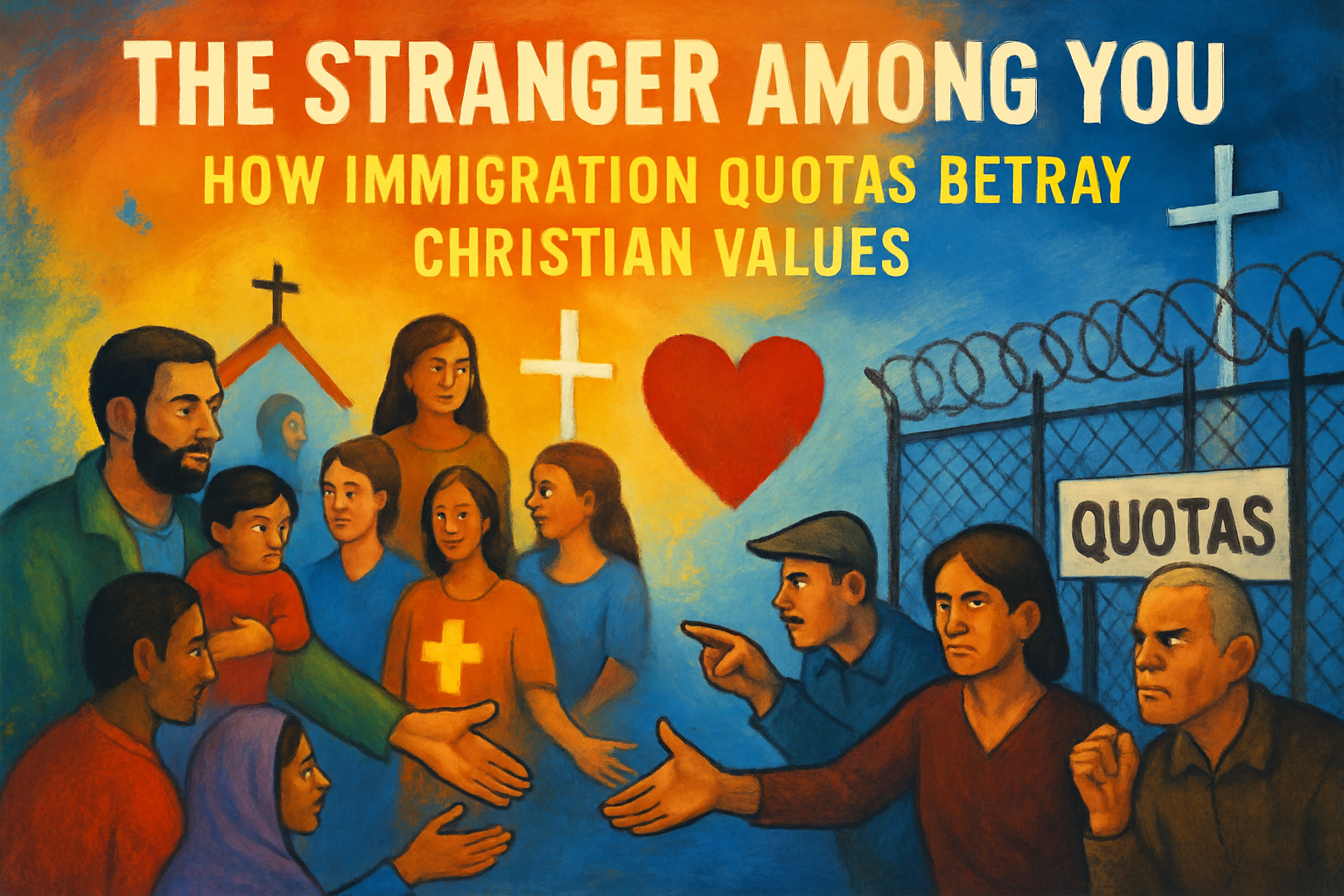
"The foreigner residing among you must be treated as your native-born. Love them as yourself, for you were foreigners in Egypt." - Leviticus 19:34
This ancient command echoes through centuries of Judeo-Christian tradition, calling believers to see the divine image in every stranger who crosses their path. Yet today, as immigration enforcement operates under numerical quotas and monthly targets, we must ask: How can officers "love them as yourself" when they're pressured to fill detention beds and meet deportation numbers?
When Numbers Replace Names
Stephen Miller's quota system for ICE officers transforms what should be careful, compassionate decision-making into a mechanical numbers game. Officers who once had discretion to consider individual circumstances now face monthly targets that reduce human beings to statistics on a spreadsheet.
The command to "love them as yourself" becomes impossible when enforcement is driven by quotas rather than stories. The single mother fleeing domestic violence, the worker who's been here for decades building a life, the family seeking asylum from persecution - their individual circumstances become secondary to hitting numerical targets.
The Biblical Standard
Scripture's message about strangers remains remarkably consistent from Genesis to Revelation. When Abraham welcomed three strangers at Mamre (Genesis 18), he didn't check their documentation first. When Jesus identified himself with the stranger in Matthew 25:35 - "I was a stranger and you invited me in" - he wasn't talking about meeting numerical targets for hospitality.
The Hebrew concept of "ger" (stranger/sojourner) appears throughout Old Testament law, always with commands for protection and fair treatment. What does it mean to treat the foreigner "as your native-born" when officers face pressure to meet monthly deportation numbers? The biblical stranger had a name, a story, circumstances that mattered - quotas reduce them to data points.
The Moral Cost of Quotas
Under quota systems, immigration enforcement becomes about quantity over quality. Officers must prioritize filling beds over exercising discernment. This mechanizes what should be the most human of decisions - determining someone's right to remain in their community, with their family, in the only country many have ever known.
The Israelites were reminded they "were foreigners in Egypt" to cultivate empathy for the displaced. But quota systems erase that shared humanity. When enforcement becomes about meeting targets, there's no room for the kind of case-by-case mercy that biblical justice demands.
Christ's Approach vs. The System
Consider how Jesus approached individuals: He saw Zacchaeus the tax collector, the woman at the well, the centurion seeking healing for his servant. Each encounter was personal, considering the whole person and their unique circumstances. This stands in stark contrast to quota-driven enforcement that must treat people as numbers to function.
When Jesus said "I was a stranger and you invited me in," he was establishing a standard that makes quota systems morally impossible. How can we claim to follow Christ while simultaneously creating systems that prevent the kind of individual attention and mercy he consistently demonstrated?
The Call to Christian Conscience
For a nation that identifies as Christian, the question becomes unavoidable: Are we treating the stranger among us "as our native-born" and loving them "as ourselves," or are we allowing quotas and numerical targets to define our response to human need?
The choice is not between having borders and having none. It's between enforcement that maintains human dignity and enforcement that reduces people to statistics. It's between systems that allow for mercy and discernment, and systems that prioritize meeting numbers above all else.
Conclusion: Returning to the Standard
"The foreigner residing among you must be treated as your native-born. Love them as yourself, for you were foreigners in Egypt."
As we return to this foundational command, the weight of our current approach becomes clear. Every quota met, every numerical target achieved, every monthly statistic reported must be measured against this ancient but timeless standard.
The choice before us as a Christian nation is clear: Will we treat the stranger among us "as our native-born" and "love them as ourselves" - or will we let quotas and numbers define our response to human need?
In the end, we will be judged not by how efficiently we met our deportation targets, but by how we treated the least of these when they appeared as strangers at our door.